We’ve Spent 100 Years Learning How to Manage People. Who’s Teaching Us How to Manage AI?
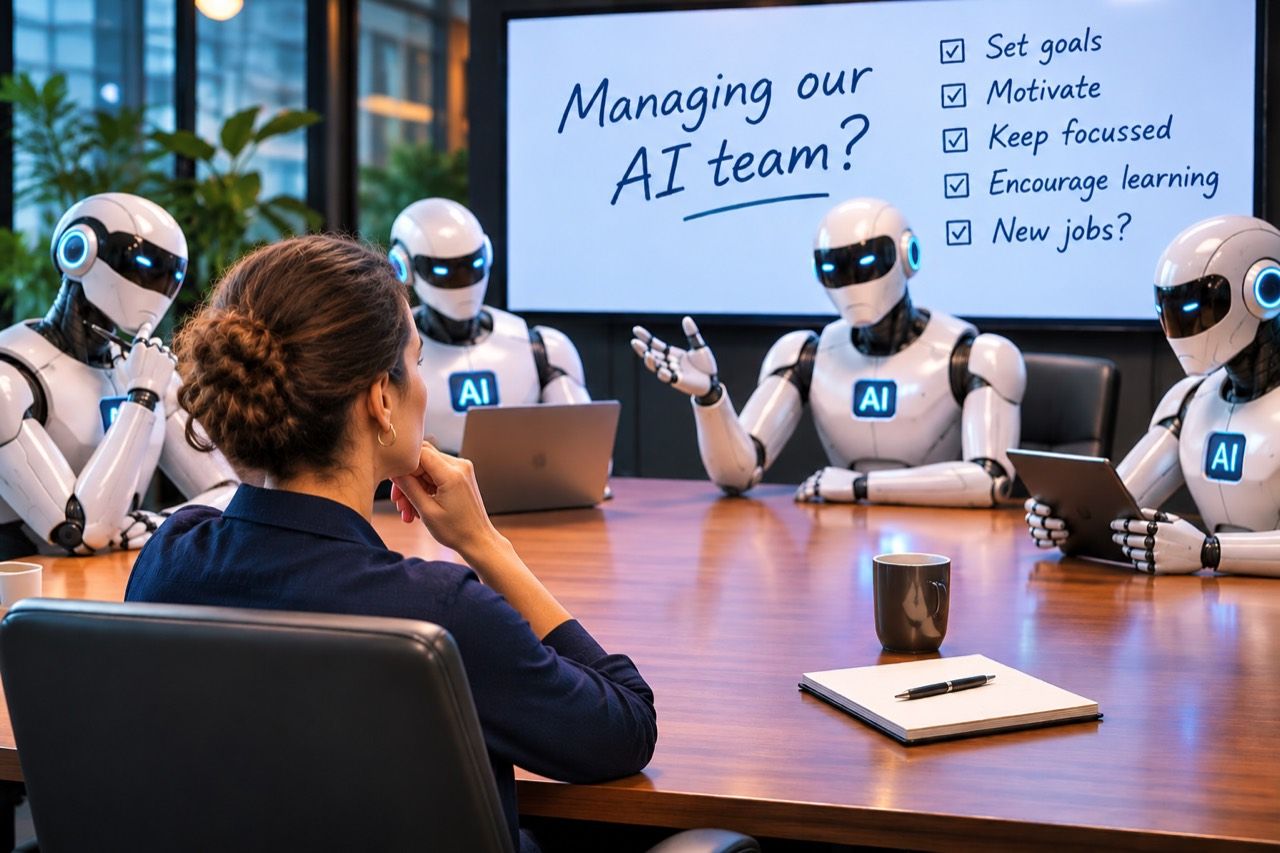
We’ve spent more than a century developing management theories, training leaders and refining techniques to get the best out of people.
Now we’re introducing an entirely new workforce — AI agents — and apparently assuming that everyone will instinctively know how to manage them.
Really?
Businesses are spending billions on AI technology. There are countless courses teaching people how to use AI tools and write better prompts.
But where are the courses teaching managers how to manage AI?
I’ve heard an experienced AI implementer describe corporate use of AI as like “kids with chainsaws”.
A wonderfully confronting analogy. We’ve handed organisations extraordinarily powerful tools without necessarily ensuring that the people wielding them know what they’re doing.
The problem may not be the chainsaw. It may be the lack of management.
Whatever Happened to Management Theory?
Remember Douglas McGregor’s Theory X and Theory Y?
Theory X assumes workers need close supervision and control. Theory Y encourages initiative, responsibility and creativity.
Much of today’s AI management resembles Theory X — detailed instructions, tight controls and constant checking.
But as AI agents become more capable, shouldn’t we be thinking more like Theory Y — setting objectives, allowing appropriate autonomy and managing by outcomes?
What about situational leadership? Shouldn’t the level of supervision depend on an agent’s competence, reliability and the risks involved?
And Maslow and Herzberg? No, AI agents don’t need recognition, job satisfaction or a pay rise. But they do need the right conditions to perform — information, resources, feedback and opportunities to improve.
Isn’t that starting to sound like management?
Of course AI agents aren’t people. But perhaps a century of management thinking has more relevance than we realise.
Are We Managing AI, or Just Giving It Instructions?
Think about a poorly managed human team.
Unclear objectives. Conflicting priorities. Inadequate resources. Constant interference. Little feedback.
Would we be surprised if productivity suffered?
Why would AI agents be any different?
Writing a clever prompt isn’t the same as managing an agent. Just as assigning work isn’t the same as leading a team.
Yet organisations are investing heavily in AI technology while apparently assuming that effective AI management will somehow take care of itself.
Where is the AI management training?
Who teaches managers when to delegate, when to intervene, how to evaluate performance and how to encourage learning and initiative?
And who takes responsibility when the agents get it wrong?
These aren’t simply technical questions. They’re management questions.
Productivity Revolution or Corporate Chainsaw?
AI promises extraordinary productivity gains. Properly managed agents could create new services, new opportunities and new jobs.
But will they?
Or will AI become another convenient excuse for corporate downsizing, as we saw during COVID?
There’s a world of difference between using AI to build a more capable organisation and simply using it to employ fewer people.
That’s a management choice, not a technology decision.
We’ve spent billions making AI smarter. Perhaps it’s time we invested in making its managers smarter.
The next great AI productivity breakthrough may not come from better artificial intelligence. It may come from better management.
And after 100 years of management theory, shouldn’t we know where to start?